HOW THE EAR WORKS
Knowing more about how the ear works can help you to understand what’s going on with your hearing and balance. People with balance problems don’t always realise that their ears might be the cause, but learning more about the physiology of the ear may help you to see which type of support you could benefit from.
PHYSIOLOGY OF THE EAR
Here’s an overview of what you need to know about the physiology of the ear:
THE OUTER EAR
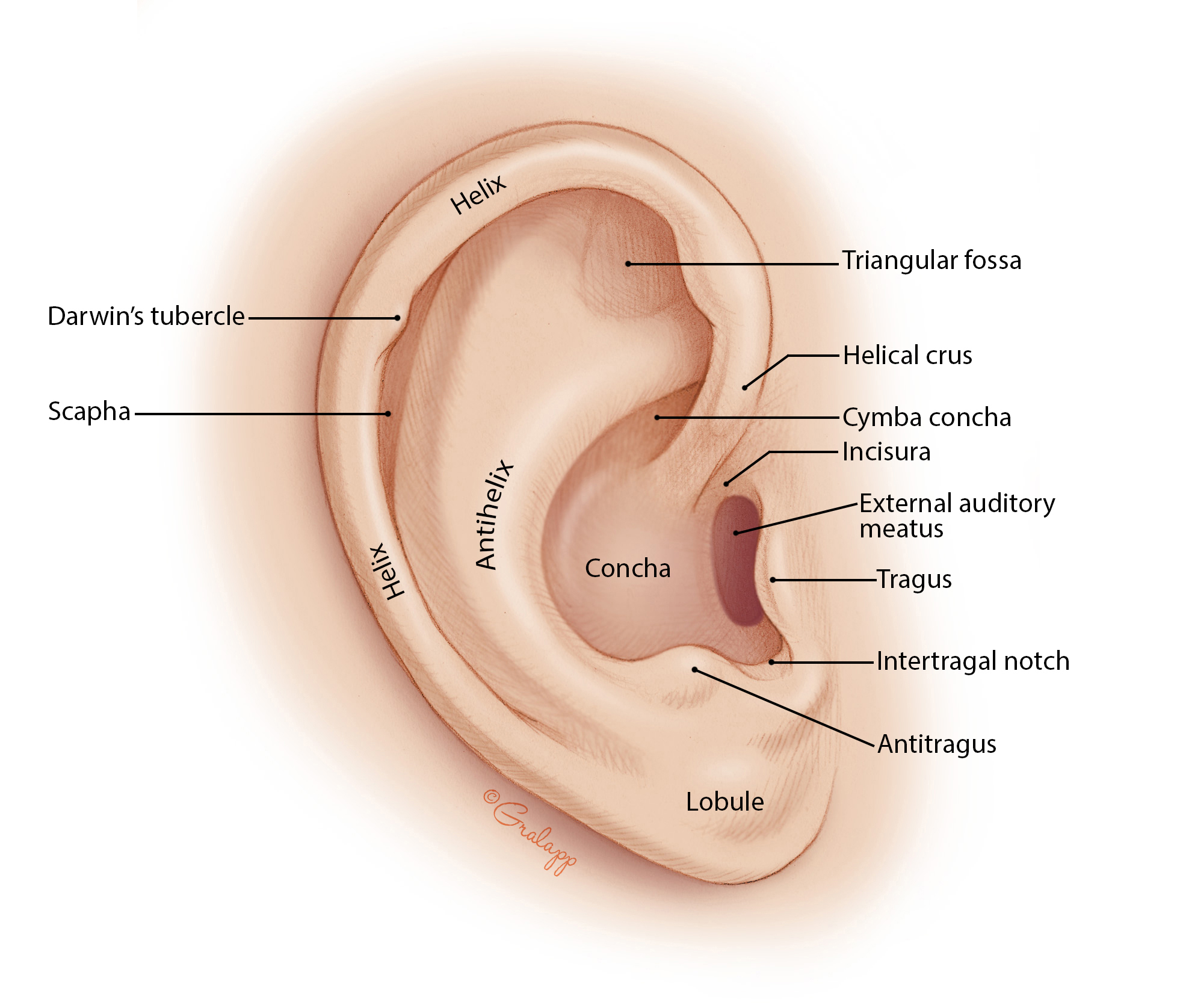
The physiology of the ear is a fascinating and intricate system that plays a crucial role in how we perceive the world around us. Understanding the complexities of the outer ear, from the pinna to the auditory canal, allows us to appreciate how sound waves are collected and channeled towards the ear drum. This process not only enhances sound levels but also aids in precise sound localization, highlighting the remarkable detail of our hearing capabilities. The outer ear is truly the gateway to a world of auditory experiences.
Knowing more about how the ear works can help you to understand what’s going on with your hearing and balance. Embark on a journey of discovery into the intricate system of the outer ear, where sound waves are collected and channeled towards the ear drum. Discover how this process not only enhances sound levels but also aids in precise sound localization, offering a glimpse into the remarkable detail of our hearing capabilities. The outer ear acts as the gateway to a world of auditory experiences, shaping the way we perceive the symphony of sounds around us.
THE MIDDLE EAR
The middle ear is an air-filled cavity that is separated from the outer ear by the tympanic membrane (ear drum).
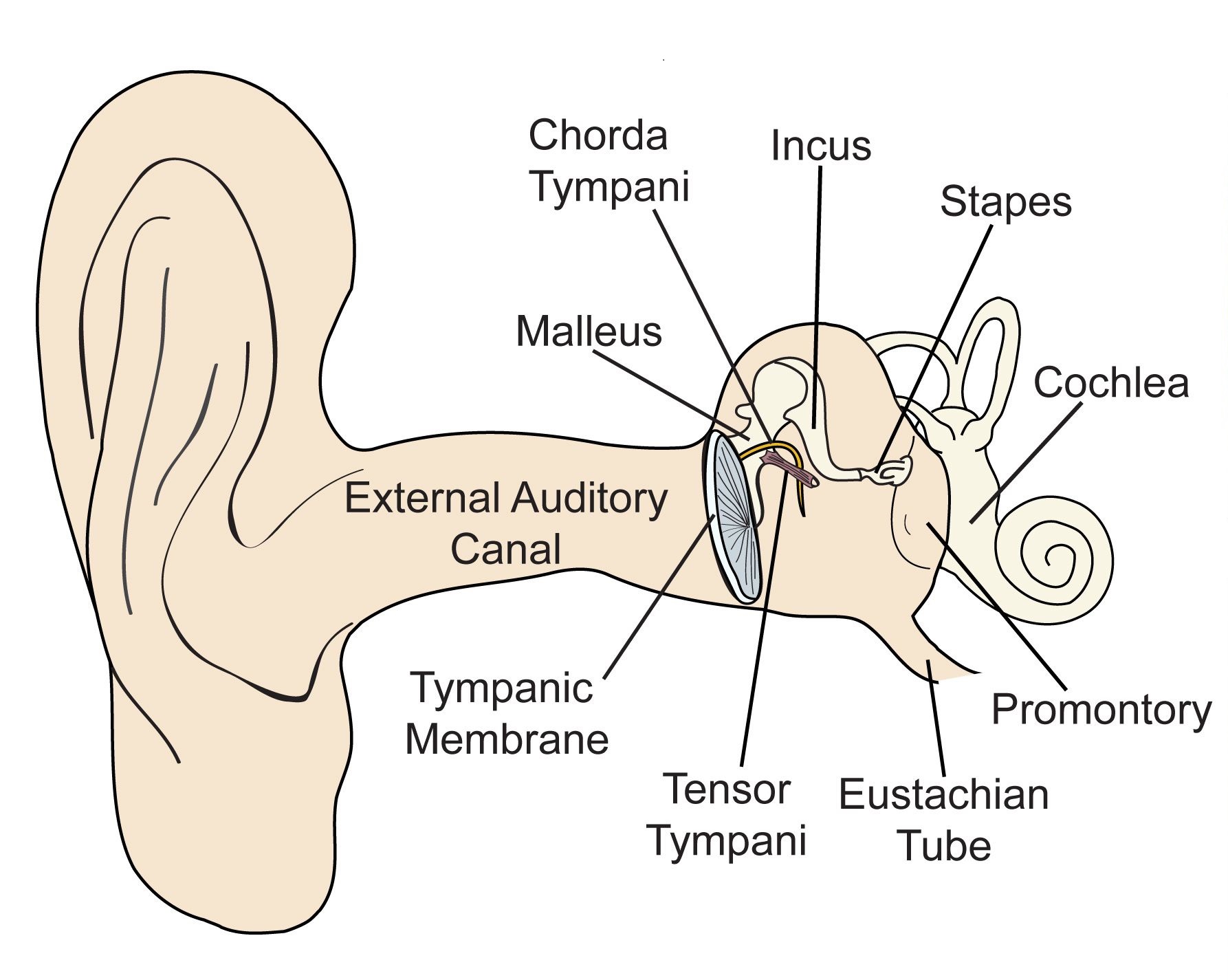
Along with the ear drum, it is also the site of the ossicular chain, which is a bridge-like structure comprised of the three smallest bones in the human body: the malleus, incus and stapes. Together, these transmit vibrations from the ear drum through to the oval window of the cochlea (organ of hearing). When sound waves reach the ear drum, it leads to the drum vibrating according to the pattern of the movement of the impacting wave – a key part of how the ear works.
The ear drum vibrates slowly in response to low frequencies and rapidly in response to high frequencies. The structure of the middle ear is such that it is designed to act as a ‘lever’, and is therefore able to amplify the sound wave vibrations impacting the ear drum through to the inner ear 20-fold.
The physiology of the middle ear also includes the eustachian tube, which opens up at the rear end of the throat, and allows for the pressure on both sides of the ear drum to be equalised for healthy transmission of sound vibration.
THE INNER EAR
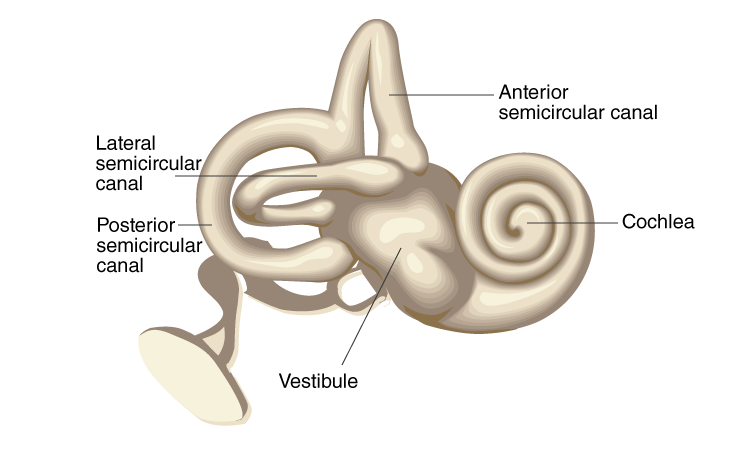
The inner ear contains the cochlea (the fundamental organ of hearing), along with the vestibular organs, which comprise the semi-circular canals and otolithic organs.
Both of these parts of the ear play a key role in how the ear works in terms of maintaining balance.Both the cochlea and vestibular organs feature complex fluid-filled labyrinths, along with specialised sensory receptor cells (hair cells), which function to transmit nerve impulses when stimulated by the movement of fluid.
In the cochlea, this fluid movement is induced by transmission of sound waves by the middle ear ‘lever’ mechanism. In contrast, fluid movement in the vestibular organs is caused by both linear and angular movements of the body and head respectively.
HOW THE EAR WORKS: HEARING
Here’s how the physiology of the ear helps you to hear: when the ossicular chain of the middle ear conducts sounds to the oval window (a membrane located on the cochlea, connecting it to the middle ear), the fluids of the cochlea begin to move, stimulating the hair cells inside.
These hair cells send electrical impulses through the auditory nerve to the brain where they will be interpreted as sound.

HOW THE EAR WORKS: HEARING
The intricate physiology of the ear also impacts your balance. Angular and linear accelerations of the head and body cause displacement of the fluids within the vestibular organs. This in turn stimulates their hair cells, which then transmit impulses through the vestibular nerve to the brain. The brain then determines the relative positions of the head and body in relation to your environment, and responds by ensuring the necessary adjustments are made by your eyes and body to ensure balance is maintained*.
Book An Appointment
Flexible appointments and urgent care.
Or call — 344 532 2352